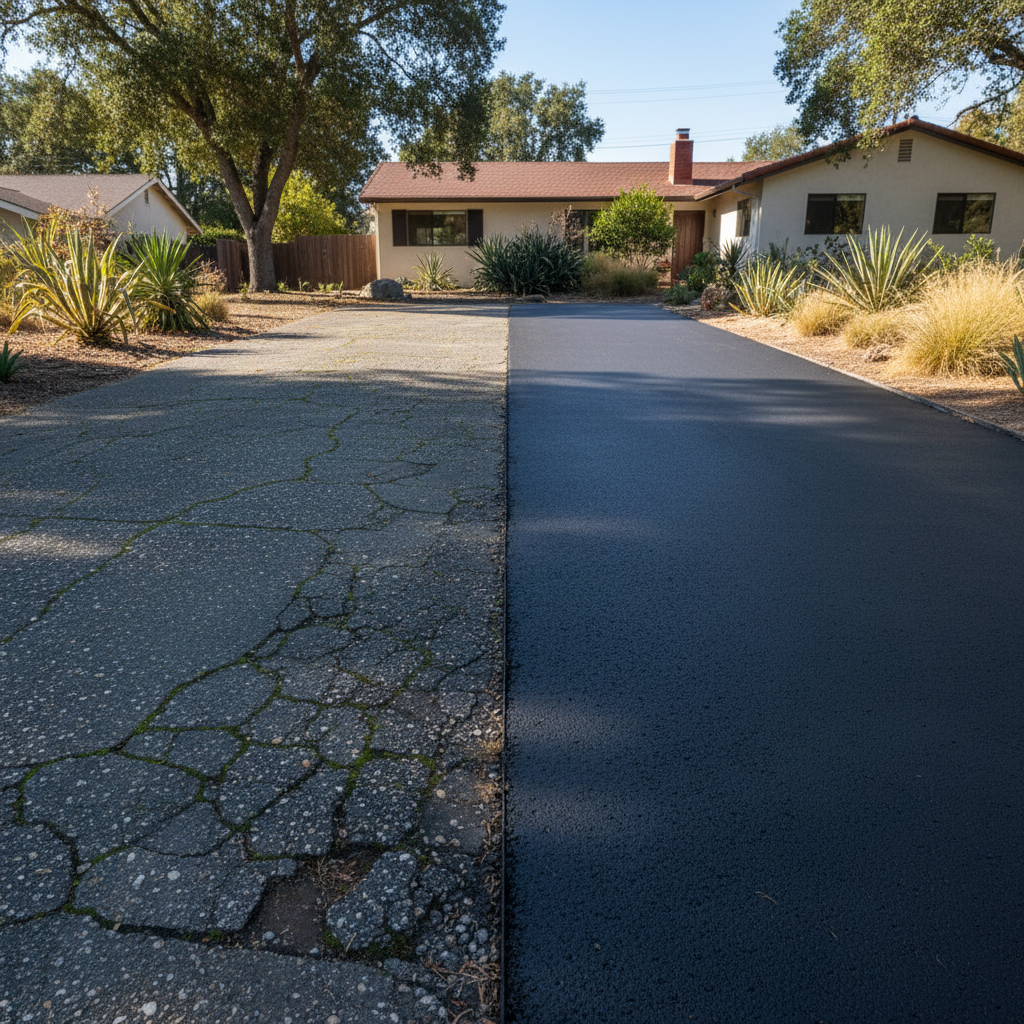
Alright, let's talk asphalt. If you've got a larger paved area on your property right here in Palo Alto—maybe a long driveway, a shared access road in an HOA, or even a small private lot—you're eventually going to face a choice. What's that choice? Do you go for an asphalt overlay or a full-depth replacement? It's not always an easy call, and I've seen folks waste a lot of money making the wrong one. So, let's get into what each option really means for you.
Asphalt Overlay (or Mill & Overlay)
Think of an asphalt overlay as a serious facelift for your pavement. It's not just slapping a new layer on top, though. A proper overlay, especially what we call a "mill and overlay," means we grind off the top inch or two of your existing asphalt first. After that, we clean the surface, put down a tack coat to help the new stuff stick, and then lay a fresh layer of hot-mix asphalt.
Cost
This is usually the big reason people choose overlays. They're significantly cheaper upfront than a full replacement, often running about $3.50 to $6.00 per square foot. You're looking at 30% to 50% less than a full replacement, which can be a huge saving, especially on a big surface. Pretty good, right?
Durability & Lifespan
An overlay can add another 8 to 15 years to your pavement's life, provided the base underneath is still in good shape. That's the key, really: if your base layer's structural integrity is compromised, an overlay is just a temporary fix. It'll look great for a bit, but those underlying problems, like alligator cracking, will likely show through the new surface within a year or two.
Maintenance
Maintenance is crucial with an overlay. You'll need to keep up with regular crack sealing to stop water from getting into the base, and periodic sealcoating (every 2-5 years) to protect against UV damage and oxidation. Without that consistent care, an overlay's lifespan drops significantly.
Appearance
A fresh overlay looks fantastic. It's a smooth, dark, brand-new surface that instantly boosts curb appeal. It'll make your property look well-maintained and professional.
Full-Depth Asphalt Replacement
This is the big one. Full-depth replacement means we're tearing out everything—the old asphalt, the base layer, and sometimes even dealing with the subgrade underneath. Then, we rebuild it from the ground up, making sure there's a solid foundation before we lay down new asphalt.
Cost
As you'd expect, this is the more expensive option, typically ranging from $8.00 to $15.00 per square foot. It's a bigger investment upfront because it involves more labor, more material, and often more time.
Durability & Lifespan
This is where full replacement really shines. When done right, you're looking at a pavement that can last 20 to 30 years. Because you're addressing any issues with the base and subgrade, you're getting a completely new, structurally sound surface. This is critical in places like Palo Alto, where we often deal with expansive clay soils that can cause a lot of movement and cracking from below.
Maintenance
While still important, a full replacement generally needs less intensive maintenance than an overlay, especially in its early years. You'll still want to sealcoat and crack seal, but the robust new foundation means fewer issues popping up.
Appearance
Just like an overlay, a full replacement gives you a pristine, new asphalt surface. The difference is that this appearance is backed by a completely renewed structure, so it's going to hold up better over the long haul against things like the seasonal expansion and contraction of our local clay soils.
My Recommendation for Palo Alto Homeowners
Here's the deal: if your asphalt has widespread structural issues—we're talking about extensive alligator cracking, potholes that keep coming back, or areas where the pavement is clearly sinking or heaving—an overlay is just going to delay the inevitable. Those are all signs that your base layer, the foundation of your pavement, has failed. In that situation, you need a full-depth replacement. It's more expensive upfront, but it's the only way to get a lasting solution and avoid throwing good money after bad.
However, if your asphalt is mostly showing surface wear—fading, minor cracks that haven't spread into a network, or a generally rough texture—and the underlying base is still solid, then an asphalt overlay is a fantastic, cost-effective option. It'll give you that fresh look and extend the life of your pavement significantly without the higher cost and disruption of a full tear-out.
The best way to figure out what you need? Get a professional assessment. We at All Things Asphalt Inc. can come out, take a look at your specific situation, and give you an honest recommendation based on the actual condition of your pavement and the unique challenges our Palo Alto environment throws at it. We'll check for those tell-tale signs of base failure and help you make an informed decision that'll save you headaches and money down the road.